

The Clean Village Revolution
How Daikundi Became Afghanistan’s Second Open Defecation-Free Province

DAIKUNDI, Afghanistan – In the rugged, mountainous terrain of central Afghanistan, families in Daikundi Province face steep geographical challenges. Extreme weather and prolonged droughts frequently force community members to walk for hours just to collect clean water. For a long time, the lack of proper toilets and sanitation spaces meant that many children and families suffered from preventable waterborne illnesses like diarrhoea and malnutrition.
Today, a significant health transformation is underway. Following years of community resolve and targeted support, Daikundi has officially been declared [August, 2026] the second province in Afghanistan to achieve Open Defecation-Free (ODF) status, following Bamyan.

This victory is the direct result of the Community-Led Total Sanitation (CLTS) programme. Launched by UNICEF in 2018 across nine districts of Daikundi province, the initiative shifts the responsibility of sanitation directly to the community. By empowering residents to identify their own challenges, local families have banded together to build practical, community-driven solutions with the support of the UNICEF team on the ground.
The Power of Local Champions: Dr. Maryam Mohammadi
Behind this clean village milestone is the dedicated work of community leaders like Maryam Mohamadi, the UNICEF project coordinator for Afghanistan’s central region. Since 2018, Dr. Maryam has supervised field teams, coordinated with local partners, and worked directly with households to build healthier habits from the ground up.
"Community-Led Total Sanitation is 80 percent focused on women," Dr. Maryam explains. "In rural areas, managing the kitchen, caring for children, and maintaining household hygiene are responsibilities that largely rest on women's shoulders."


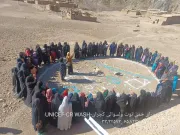
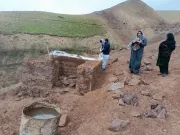
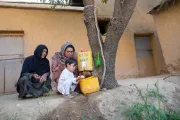
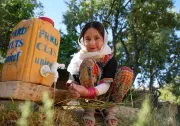
Dr. Maryam’s field teams visited families door-to-door, advising mothers on the importance of using toilets and washing hands before cooking or feeding children. Recognizing that systemic changes require practical fixes, she introduced simple, cost-effective innovations—such as specialized soap pots kept right outside latrines—to make handwashing easy and accessible for children.
The strategy relied heavily on local peer networks. When one family adopted improved hygiene practices, they regularly shared the knowledge with their neighbors, prompting entire villages to construct their own latrines.
The immediate health benefits for children are clear. Zahra, a mother of three living in Daikundi, has noticed a visible shift in her household since the implementation of the project.

"Diseases have decreased among my children," Zahra shares.
Daikundi’s success highlights how strong coordination, strategic planning, and community ownership can drive large-scale behavioral change. By taking collective responsibility for their environments, these communities are building a cleaner, safer, and more resilient future for every child.


